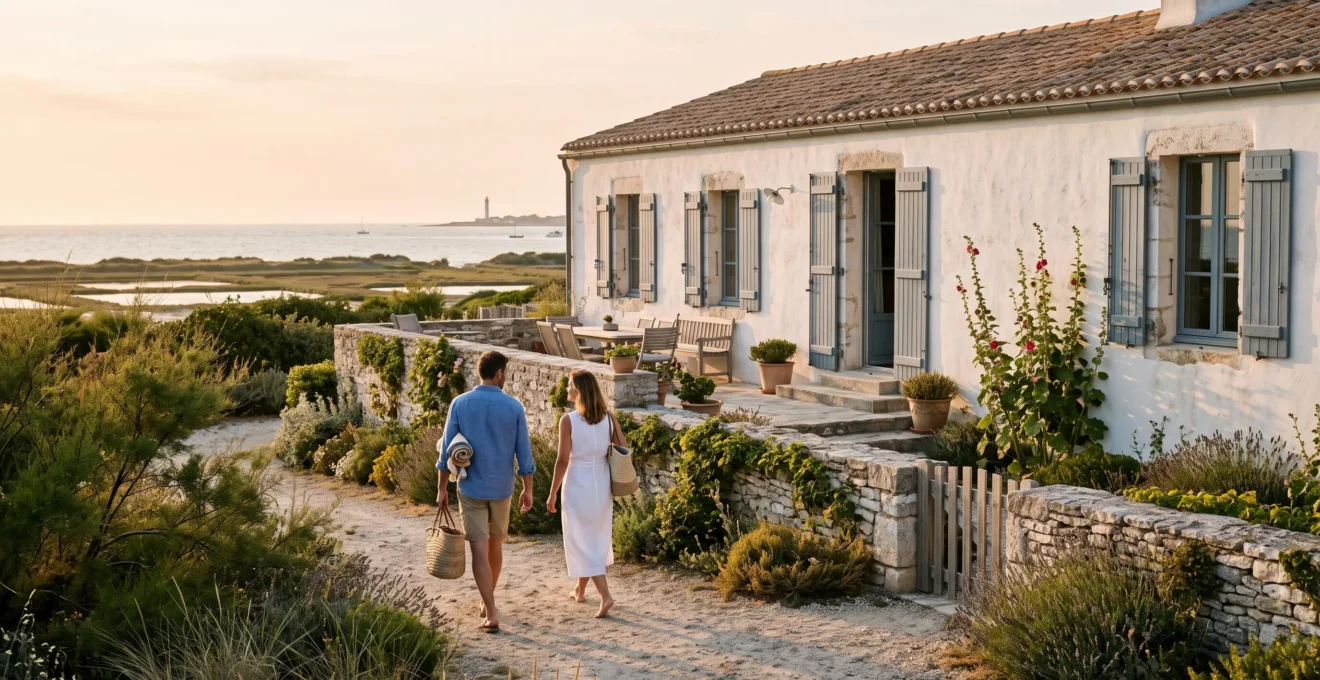
Paying a premium for a luxury stay on Île de Ré should buy you more than a pretty listing: it should buy you confidence. The most reliable way to compare villas is to link each “feature” to a real use on the island—cycling to the market, a windy aperitif on the terrace, or a quiet swim outside peak beach hours.
Direct answer: The best luxury villa features in Île de Ré are the ones you can verify and that change your daily experience: the right micro-location (village, coast, or countryside), genuine privacy outdoors, a well-designed terrace for island living, and comfort details that hold up in summer crowds and shoulder-season weather—always confirmed in writing with the owner or manager before you book.
A practical way to judge a premium villa—fast
- Start with location: choose the area that matches your rhythm (lively village vs quiet vineyards vs direct coast access).
- Prioritise outdoor living: terrace layout, shade, wind protection, and privacy matter as much as a pool.
- Verify “luxury” with evidence: recent photos, a dated inventory, clear terms and what’s included.
- Plan around seasonality: availability and rates shift sharply—confirm with the rental partner before committing.
What Makes a Luxury Villa in Île de Ré Truly Exceptional?
A truly exceptional villa is not defined by a label—it’s defined by observable quality and by how effortlessly it supports your days on the island. On Île de Ré, that usually means a careful balance: the island’s understated, whitewashed style and shuttered façades on the outside, and high-end comfort on the inside.
What should “luxury” mean in practice during your stay?
Use a simple test: if a feature won’t change your day-to-day comfort, it’s decoration—not luxury. The most meaningful upgrades are the ones you feel at 7 a.m. (quiet, light, privacy), at midday (shade, cool interiors), and in the evening (outdoor dining that works even with coastal wind).
- Materials and finishes you can spot: consistent flooring, quality joinery, well-fitted shutters, outdoor stonework that feels solid and maintained.
- Layout that protects privacy: bedrooms not stacked around the noisiest terrace area, outdoor seating not exposed to neighbours’ sightlines.
- Design that fits the island: an authentic “Rétais” feel can still be premium—think renovated village house with modern comfort rather than “big house, empty atmosphere”.
How do you judge quality beyond listing promises?
Rely on proof, not adjectives. Ask for documentation you can compare across properties: a full equipment inventory, a floor plan if available, and a clear description of what is private vs shared. If something is important to you (pool heating, air conditioning, secure parking), treat it as a checkbox item that must be confirmed in writing.
For a neutral benchmark, you can also consult the official French reference used to classify furnished tourist accommodation. The Atout France grid explicitly lists a heated pool as an optional criterion, which is a useful reminder: it’s not automatic in rentals and must be verified property by property via Atout France’s furnished accommodation classification criteria (2022).
Premium-price reality check: if a listing doesn’t state a feature clearly (heating period, A/C zones, Wi‑Fi quality, bedding sizes), assume it’s uncertain until you receive confirmation from the owner or manager.
A quick comparison: renovated village house vs contemporary villa
A renovated village house can be the better “luxury” choice if you want to walk to cafés and markets, live mostly outdoors, and value character. A contemporary villa can win if your priority is seamless indoor-outdoor flow, larger volumes, and a more resort-like feel—especially if you’ll spend more time at the property than exploring.
Prime Locations: Choosing Between Villages, Vineyards and the Coast
Location is the feature that can’t be changed—and on Île de Ré it shapes everything: your bike routine, noise levels, access to beaches, and whether you need a car daily. The island is made up of ten villages with distinct atmospheres, so “best area” depends on the experience you’re buying, not on a universal ranking.
For a reliable overview of the island’s structure, use the official presentation from Destination Île de Ré: Ten villages and multifaceted landscapes. It’s a helpful starting point before you compare listings that sometimes use vague location wording.
Which area of Île de Ré should you stay in?
If you want a lively, walkable holiday, focus on village-centre locations where you can do mornings without a car: bakery runs, markets, harbour strolls, and dinner reservations without logistics. Saint-Martin-de-Ré is known for its harbour energy; Ars-en-Ré is often associated with postcard charm and a village feel—both can fit, depending on whether you prefer bustle or calm.
If you want beach-first days, aim for a coastal position where you can reach the sand quickly and come back easily for lunch, shade, or a nap—especially with children. The trade-off is that “near the sea” can also mean more exposure to wind and less shelter outdoors, so terrace design and wind protection become part of the location decision.
If you want quiet and space, look toward countryside or vineyard-adjacent settings where neighbours are further away and nights are darker and calmer. This can feel more private and restorative, but you’ll usually plan your outings (markets, restaurants, beaches) more deliberately.
| Criterion | Village-based villa | Vineyards/countryside or coast-oriented villa |
|---|---|---|
| Daily rhythm | Walkable mornings, spontaneous dinners | More planning; stronger “retreat” feel |
| Atmosphere | Life, shops, harbour energy (season-dependent) | Calm, views, nature; potentially windier on the coast |
| Mobility | Less reliance on car; bikes feel easy | Bike storage and routes matter more; car may help |
| Best for | Guests who value local buzz and convenience | Guests who value privacy, scenery, and quiet |
Cas pratique
Hypothetical example: a family with two children prioritises quick beach access and midday breaks, so they shortlist villas where the beach is reachable without complex logistics and where the terrace has reliable shade. A couple looking for slow mornings chooses a quieter countryside setting, then spends their budget on privacy, outdoor dining comfort, and a pool they will actually use outside peak beach hours.
Must-Have Features: Pools, Terraces and Outdoor Living
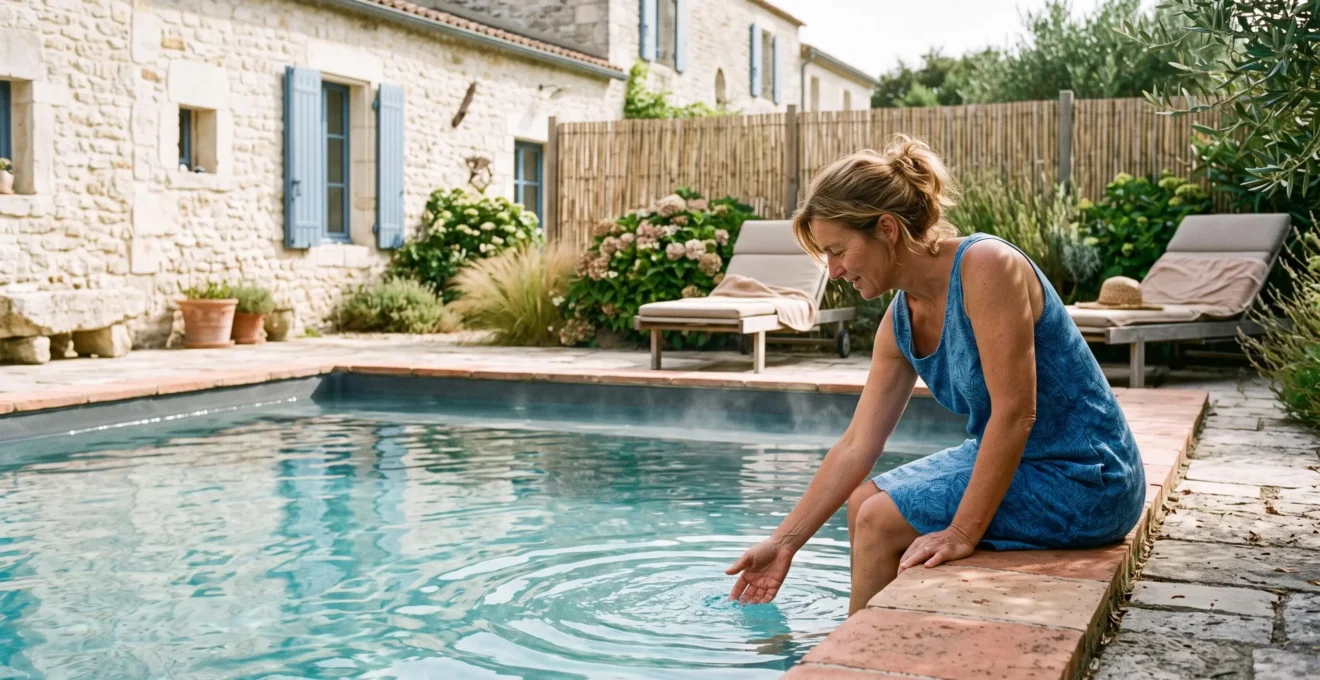
On Île de Ré, “luxury” is often lived outdoors. That’s why the most valuable features are less about impressive square meters and more about how well the villa supports real island habits: salty hair after the beach, bikes coming and going, long lunches under shade, and evenings that may be breezy even in summer.
Is a private heated pool worth it for an Île de Ré villa holiday?
A private pool is worth considering if it will meaningfully expand your usable time at the villa: early swims before cycling, a calm alternative to busy beaches, or shoulder-season comfort when the sea feels cool. “Heated” is sometimes used loosely in listings, so treat it as a specification to verify (heating period, target temperature, and any extra charges if applicable).
As a point of reference, the official Atout France classification framework lists “heated pool” as an optional item—useful as a reminder that it’s not a given even in high-end rentals, and you should confirm it explicitly with the host or agency (Atout France, 2022).
What terrace setup actually feels premium on the island?
Prioritise a terrace you’ll use daily, not a terrace that photographs well once. The best setups typically include distinct zones: dining, lounging, and a sheltered corner that stays comfortable when wind picks up. If you’re travelling in high summer, shade is not a bonus—it’s what makes outdoor living realistic at midday.
- Dining that works: a table sized for your group, stable seating, and lighting that makes evening meals pleasant.
- Wind and privacy management: planted screens, walls, or smart orientation—so aperitifs don’t feel exposed.
- Outdoor cooking done right: if a plancha or summer kitchen is advertised, confirm what equipment is actually provided (utensils, gas/electric setup, cleaning expectations).
Which indoor comforts are non-negotiable at a premium price?
Indoor comfort matters most when weather shifts or the island is busy and you want to enjoy staying in. Focus on elements that affect sleep and recovery: bedding quality, quiet bedrooms, effective ventilation, and a living space that doesn’t overheat. Reliable Wi‑Fi is also practical if you’re coordinating reservations, remote work, or streaming in the evenings.
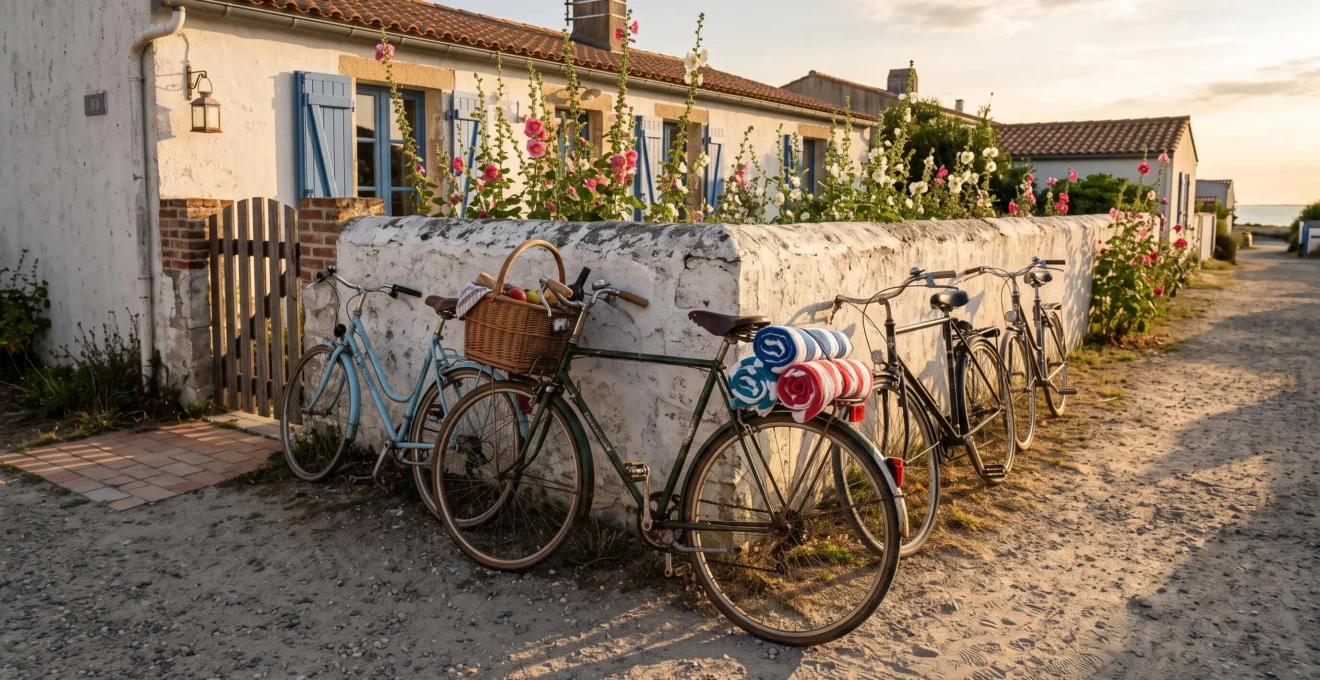
Island-specific detail: if cycling is part of your plan (it often is on Île de Ré), ask for a secure bike storage area and simple rinsing options for sandy gear. It’s a small feature that changes your daily comfort.

How to Secure the Right Villa at the Right Price?
The goal isn’t to “find the cheapest luxury villa”—it’s to avoid paying a premium for uncertainty. A high-end booking becomes rational when you can verify what you’ll actually get, understand the terms, and choose dates that match your priorities.
How can I avoid paying a premium for a luxury villa that disappoints?
Use evidence-based checks before you commit money. Start with recent, high-resolution photos that show lived-in details (outdoor seating, shade, pool condition), then match them against a written inventory. If the listing is vague, ask precise questions and keep the answers in writing.
- Confirm the exact location
Ask for the nearest village area or a map pin, then check how it fits your plan (markets, beaches, cycling routes). “Near” is subjective—replace it with real distances or travel time.
- Request a complete equipment inventory
Make sure it covers pool details (private/shared, heating period, safety equipment if applicable), kitchen equipment, bedding sizes, laundry, and outdoor furniture.
- Scrutinise terms and extra costs
Read cancellation conditions, deposit schedule, end-of-stay cleaning, and any optional services. If something is unclear, ask before paying.
- Align dates with your priorities
For school holidays and peak summer weeks, options narrow quickly. If your “must-haves” are strict, earlier shortlisting usually gives you better choice.
- Cross-check consistency
Look for mismatch between photos, text, and inventory. When you spot inconsistencies, treat them as a signal to clarify—or to move on.
How does seasonality affect availability and value?
On Île de Ré, seasonality is not subtle: the island can feel dramatically different across spring, high summer, and late season. That’s why the “right price” is always contextual—rates and availability should be confirmed directly with the owner or agency for your exact dates and length of stay.
Destination Île de Ré reported contrasting seasonal signals in 2025—tourist office visits down between April and August, while furnished rental occupancy increased in July and August—highlighting that demand can concentrate strongly in peak summer weeks (data cited by Réal’ahune, 2025). If you’re comparing offers, treat peak periods as a different market than shoulder season, not simply “the same villa at a different price”.
If you also want a general method to time reservations, this page offers practical booking timing tips you can adapt to villa planning (always confirm the villa’s specific rules and calendar with the host).
Planning Your Île de Ré Villa Holiday
If you want a stay that feels effortless, plan in the same order you’ll experience the island. First lock the micro-location that matches your desired rhythm. Then prioritise the outdoor setup you’ll actually use daily (shade, dining, privacy, wind protection). Finally, confirm the comfort and practicalities that reduce friction: bedding, ventilation, Wi‑Fi, bike storage, and clear house rules.
- If your priority is “walk everywhere” village life:
Choose the villa with the most precise location details and the best sound/privacy separation (quiet bedrooms matter when the village is lively).
- If your priority is “villa-as-a-retreat”:
Choose the property with the strongest outdoor privacy, a sheltered terrace, and indoor comfort that holds up on windy or cooler days.
- If your priority is “family beach routine”:
Choose the villa that makes transitions easy: outdoor shower/rinse options, shade at midday, and a layout where kids can nap while others enjoy the terrace.
What features should I check before booking a luxury villa?
Check verifiable items first: exact location details, privacy (screens, orientation), terrace usability (shade and wind protection), pool specifics (private/shared, heating period), bedding sizes/quality, Wi‑Fi reliability, and clear booking terms (deposit, cancellation, cleaning). Ask for a written inventory so you can compare villas fairly.
Should I choose a villa in a village, near vineyards or on the coast in Île de Ré?
Choose a village if you want walkable days with markets, cafés, and harbour atmosphere. Choose vineyards/countryside if you want calm, privacy, and a “retreat” feel. Choose the coast if beach access and sea light matter most—then pay extra attention to terrace shelter and wind exposure, because that’s what can make outdoor living truly comfortable.
How do I know if a villa is really worth its premium price?
A premium price is justified when the features are both meaningful and provable: consistent quality in photos, a detailed inventory, transparent terms, and a location that matches your ideal island routine. If key features are vague or only described with adjectives (“exceptional”, “prestige”), ask precise questions and only proceed once you have written confirmation.
If you’re down to two or three favourites, treat your final choice like a mini-audit: match the villa’s features to the week you want to live on Île de Ré, then confirm availability, rates, and terms directly with the rental partner. That’s how premium turns into peace of mind.